

Best Free Home Improvement Calculators
Overbuying Materials Wastes Money -- Underbuying Wastes a Trip to the Store
Getting a materials estimate right the first time means measuring accurately and doing the math correctly -- two separate steps that both matter, since even a perfect measurement produces a wrong material total if the coverage math or waste allowance is off. Underestimate and you're making a second trip to the store mid-project, often at a moment that's inconvenient and sometimes at a higher per-unit price for a small top-up purchase. Overestimate significantly and you've tied up money in materials sitting unused in a garage. This site's home improvement calculators handle the math part precisely, using the same waste-factor conventions contractors actually use rather than a rough eyeball guess.
Concrete
The Concrete Calculator handles any rectangular slab, patio, or pad -- enter length, width, and thickness, and it computes the cubic yardage needed, which is how ready-mix concrete is typically ordered and priced. Getting this number right matters more for concrete than most materials, since ordering short means a visible seam between pours (a real structural and cosmetic issue), while ordering meaningfully over means paying for concrete that gets wasted. Browse the full Concrete Calculators category for more specific shapes beyond a simple rectangular slab -- footings, columns, steps, and other common residential concrete forms each have their own dedicated calculator matching their specific geometry.
Flooring, Paint & Drywall
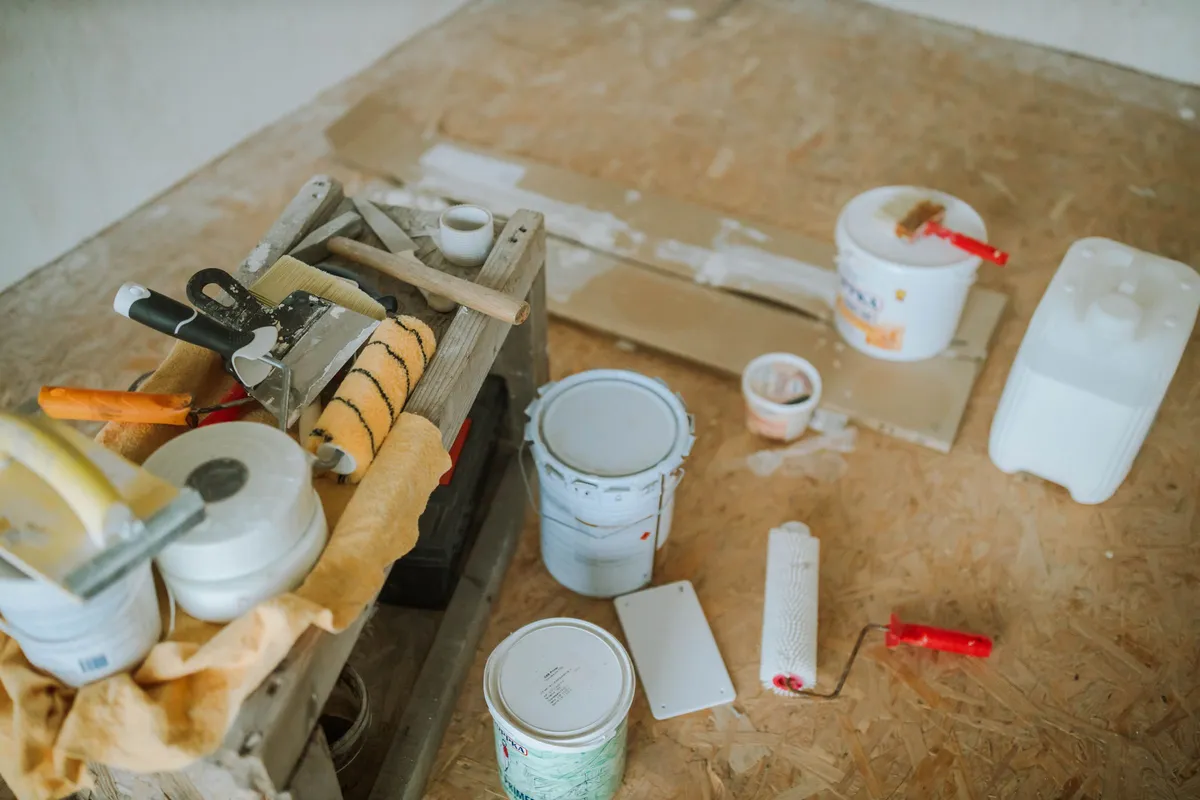
These material categories each have their own dedicated calculators covering coverage rates, waste factors, and common product sizes specific to that material -- flooring calculated by square footage and box coverage, paint by square footage and typical coverage-per-gallon, drywall by sheet count and standard sheet sizes. Browse the Home Improvement Calculators category for the full list across flooring, paint, drywall, roofing, and insulation, each built around that specific material's actual purchasing units rather than a generic "square footage" calculator that leaves you to do the unit conversion yourself.
Why Waste Factors Matter
Every real material estimate should include a waste allowance -- cuts, mistakes, pattern matching (especially relevant for tile and some flooring styles), and uneven or irregular surfaces all consume more material than the theoretical exact coverage math would suggest. Most calculators on this site default to a commonly used 10% waste factor, which reflects standard industry practice for straightforward rectangular rooms, and is adjustable if your specific project has more cuts, angles, or a more demanding pattern-matching requirement than a typical room.
Measuring Accurately Before You Calculate
No calculator can correct for an inaccurate initial measurement -- garbage in, garbage out applies fully here. A few habits that improve measurement accuracy: measure at multiple points across a room rather than assuming perfectly square walls (older homes especially rarely are), account for doorways, closets, and other irregular cutouts rather than treating a room as one simple rectangle, and remeasure once before finalizing an order rather than trusting a single quick pass. The extra few minutes spent measuring carefully pays off directly in how close the calculator's output ends up to what you actually need.
Budgeting for Delivery and Labor Alongside Materials
Materials are only one part of a project's total cost -- concrete delivery, tool or equipment rental, and any hired labor all add to the real total budget beyond what a materials calculator alone reports. Treating the material estimate as one input into a broader project budget, rather than the entire budget itself, avoids the common surprise of a project costing meaningfully more than the materials-only number suggested once every other line item is added in.
Frequently Asked Questions
Should I trust the calculator's waste factor, or my supplier's recommendation?
If your supplier or contractor gives you a specific waste percentage for your project, use that -- the default in these calculators is a reasonable general-purpose starting point, not a project-specific recommendation, and someone who's seen your actual space or material choice may reasonably adjust it up or down.
Should I round up when a calculator gives a fractional result, like 2.3 yards of concrete?
Generally yes -- most materials are sold in fixed units (a full cubic yard, a full box of tile, a full gallon of paint), so rounding up to the next full purchasable unit is standard practice, and it's exactly what the waste factor is partly there to account for.
Do these calculators account for material sold in non-standard package sizes?
They're built around common standard package sizes for each material type -- if your specific supplier sells in an unusual size, adjust the calculator's output accordingly, or check with the supplier directly for their exact packaging before finalizing an order.
Should I buy all materials at once, or in stages as a project progresses?
For a straightforward single-room project, buying everything upfront (with the calculated waste factor included) avoids the risk of a discontinued product batch or color-lot mismatch on a follow-up purchase -- a genuine risk with tile, paint, and flooring especially. For a larger multi-phase project, staged purchasing can make more sense for cash flow and storage reasons, as long as you account for the possibility of needing to match a lot number later.
Why do tile and flooring calculators often need a higher waste factor than paint?
Cut waste, pattern matching, and breakage during installation all consume more material for tile and hard flooring than they do for paint, which has essentially no cutting waste at all -- this is why the default waste factor varies by material category rather than using one universal percentage across every project type.
Should DIY projects use a higher waste factor than professional contractors typically budget for?
Often a slightly higher one is wise -- an inexperienced installer typically makes more cutting mistakes and has more material rejected for minor imperfections than an experienced professional would, so a DIYer bumping the default waste factor up a few percentage points is a reasonable, low-cost precaution against an extra mid-project store run.
Do these calculators account for regional price differences in materials?
No -- they calculate quantity needed, not price, since material pricing varies too much by region, supplier, and time to build into a static calculator reliably. Use the quantity result to get an accurate quote from your own local supplier.
Comments (0)
No comments yet. Be the first to share your thoughts.