

Understanding Compound Interest
"Interest on Interest" Is the Whole Story
Compound interest means you earn (or owe) interest not just on your original principal, but on previously accumulated interest too -- which is why growth (or debt) accelerates over time rather than growing at a flat, steady rate.
The Formula
Compound growth follows: final amount = principal × (1 + rate)^time (with more complex versions for periodic contributions or non-annual compounding). Use the Compound Interest Calculator to see this directly for your own numbers.
Why Time Matters More Than Rate, Early On
Because each period's interest compounds on the last, starting early has an outsized effect -- money invested for 30 years at a moderate rate can outgrow money invested for 15 years at a meaningfully higher rate, purely because of the extra compounding time.
The Same Principle Works Against You With Debt
Credit card interest compounds the same way -- carrying a balance means you're paying interest on previously unpaid interest, which is exactly why credit card debt can grow so quickly if only minimum payments are made. See the Credit Card Interest Calculator.
Compounding Frequency Matters Too

Interest that compounds monthly grows slightly faster than the same nominal annual rate compounded only once a year, since interest starts earning its own interest sooner.
A Worked Example With Hypothetical Numbers
Let's use a simple made-up scenario. You invest 10,000 dollars at an assumed 6% annual return, compounded once a year, and never add another cent. After year one you have 10,600 dollars. In year two, you earn 6% on 10,600, not on the original 10,000, so you gain 636 dollars instead of 600, and end with 11,236. Each year the gain is a little bigger than the last. After 10 years the balance would be roughly 17,908 dollars, and after 30 years roughly 57,435 dollars, using the formula from above. Notice that the last decade adds far more dollars than the first decade, even though the rate never changed. Real investment returns are never a smooth guaranteed 6%; this is only an illustration of the math.
Simple vs. Compound Interest
With simple interest, you earn only on the original principal. The same 10,000 dollars at 6% simple interest would earn a flat 600 dollars every year, reaching 28,000 dollars after 30 years. That is less than half of the compounded figure. The gap comes entirely from interest earning its own interest, and it grows the longer the money stays put.
The Power of Regular Contributions
Most people do not invest a lump sum once; they add money regularly. Regular contributions compound too, because each deposit begins earning interest as soon as it lands. Even modest monthly amounts can build up meaningfully over decades, and consistency tends to matter more than trying to pick a perfect moment. Use the calculator above to test how changing your monthly contribution, even by a small amount, changes the ending balance.
- Start now, even if the amount is small; time is the biggest lever.
- Automate contributions so saving does not depend on willpower.
- Increase contributions when your income rises.
- Leave the money invested rather than withdrawing early.
APR vs. APY
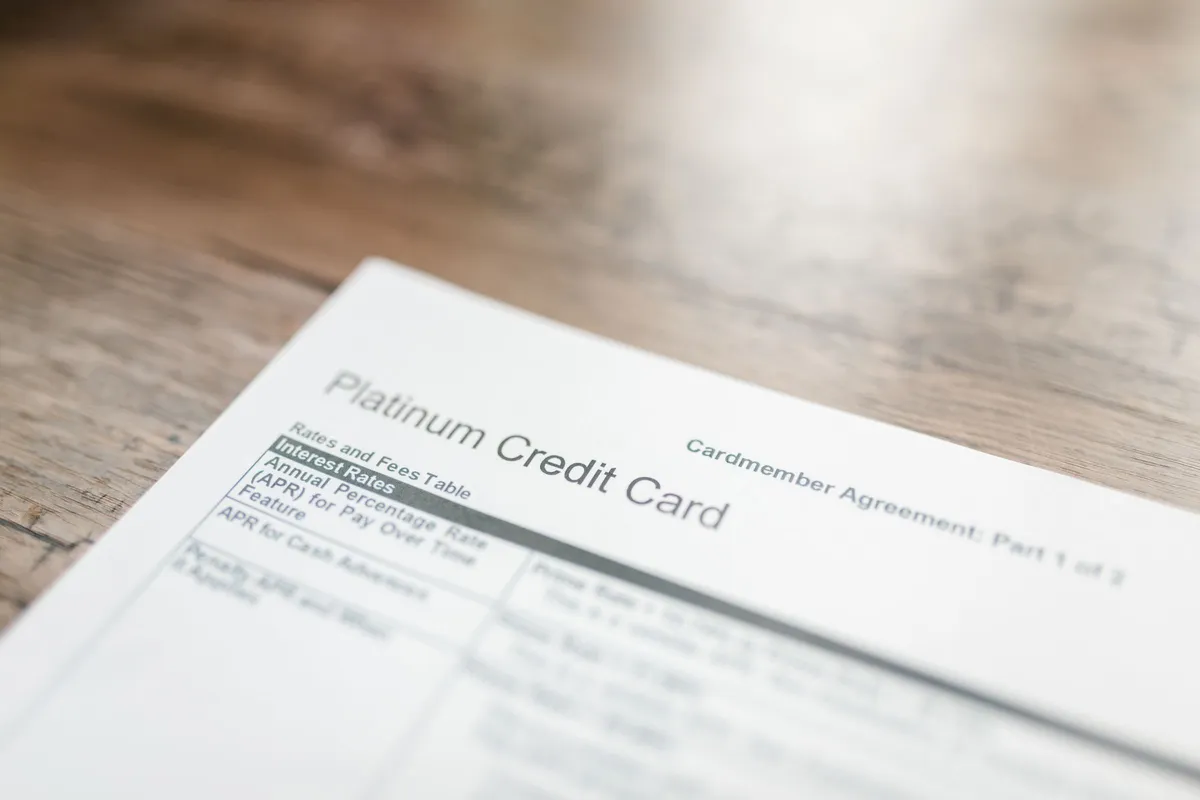
You will often see two different rate labels. APR is the stated annual rate without counting compounding within the year. APY includes the effect of compounding, so it is the number to compare when you are choosing between savings accounts. Two accounts with the same APR but different compounding schedules will have slightly different APYs, and the one with the higher APY earns more. For loans, the reverse logic applies: check the total cost of borrowing, not just the headline rate.
Common Mistakes
- Treating a projected return as a guarantee. Investment returns vary and can be negative in some years.
- Ignoring fees. Even small ongoing fees compound against you over decades.
- Forgetting inflation, which reduces what a future balance can actually buy.
- Ignoring taxes on gains, which depend on the type of account and your situation.
- Carrying high-interest debt while trying to invest. Paying down a high-rate balance is often a guaranteed return equal to that rate.
Compounding Against You
The math that helps investors hurts borrowers. A hypothetical 5,000 dollar credit card balance at a high interest rate can grow surprisingly fast if only minimum payments are made, because unpaid interest gets added to the balance and then charged interest itself. Paying more than the minimum, and paying as early as possible, shrinks the amount that can compound against you.
When to Talk to a Professional
For decisions about retirement accounts, tax-advantaged savings, or how to balance debt payoff against investing, a fee-only financial planner can help tailor advice to your situation. For current contribution limits and tax rules, check the IRS website rather than relying on numbers you see in general articles, since these change over time.
Using a Calculator to Test Scenarios
The most useful way to learn compounding is to play with the inputs. Try the same starting amount with a slightly lower rate, then a slightly higher one, and see how much the outcome shifts. Then keep the rate fixed and change only the number of years. You will usually find that adding time or contributions moves the result more than chasing a marginally higher rate. Also try running the numbers with a more cautious rate than you hope for, so your plan does not depend on optimistic assumptions. Comparing several scenarios side by side helps you set realistic goals and see which habit is worth the most effort.
Frequently Asked Questions
Is the "Rule of 72" accurate?
It's a reasonably close mental-math approximation for how long it takes an investment to double (72 ÷ interest rate ≈ years to double), though the actual compound interest formula is more precise for real calculations.
What is the difference between APR and APY?
APR is the stated yearly rate before considering compounding within the year, while APY includes the effect of compounding. When comparing savings accounts, APY gives the fairer comparison.
Does compound interest work if I keep adding money?
Yes. Each new deposit begins earning interest immediately and then compounds along with the rest of your balance, which is why regular saving can grow into a large total over many years.
Should I pay off debt or invest first?
It depends on the interest rate on the debt, your emergency savings, and whether an employer match is available. High-interest debt is often a priority, but consider a financial professional for your specific situation.
Are the calculator results guaranteed?
No. Calculators assume a steady rate for illustration. Real returns fluctuate, and fees, taxes, and inflation all affect what you end up with.
Comments (0)
No comments yet. Be the first to share your thoughts.