

Understanding the Standard Deduction
A Flat Reduction to Your Taxable Income
The standard deduction is a fixed dollar amount, based on your filing status, that reduces your taxable income before tax is calculated -- available to every taxpayer without needing to document specific expenses, gather receipts, or justify anything to the IRS. It's the simpler of the two deduction paths available, and understanding both how it works and when the alternative (itemizing) is actually worth the extra effort is genuinely useful knowledge for anyone filing a return.
Checking the Current Amount
Use the Standard Deduction Calculator to look up the current tax year's amount by filing status -- this is adjusted for inflation annually, so always check the current year's figure rather than relying on a number you remember from a prior year, which is very likely to be at least somewhat out of date.
Standard Deduction vs Itemizing
Itemizing means listing specific deductible expenses (mortgage interest, charitable donations, certain medical costs above a threshold, state and local taxes up to a cap) instead of taking the flat standard amount, which requires documentation for each individual expense claimed. You should itemize only if your total itemized deductions genuinely exceed the standard deduction -- otherwise the standard deduction gives you a bigger reduction with far less paperwork and audit risk, making it the clearly better choice in that scenario.
Why Most Taxpayers Take the Standard Deduction
Since the standard deduction was significantly increased under the 2017 Tax Cuts and Jobs Act, a large majority of taxpayers now find the standard deduction exceeds what they'd get from itemizing -- a meaningful shift from the pre-2017 tax landscape where itemizing was far more commonly worthwhile. This makes itemizing worthwhile today mainly for those with unusually high deductible expenses, like a large mortgage with substantial interest, major charitable giving, or significant uninsured medical costs in a given year.
Calculating Your Taxable Income

Once you know which deduction path applies to your situation, use the Taxable Income Calculator to see your resulting taxable income after that deduction is applied -- the number that actually feeds into your tax bracket calculation and determines your tax liability, not your gross income.
A Simple Way to Decide Which Path to Take
Rather than guessing, a practical approach is to actually total your realistic itemizable expenses for the year -- mortgage interest from your lender's year-end statement, charitable contribution receipts, and any other qualifying costs -- and compare that sum directly against the current standard deduction for your filing status. If the itemized total clearly falls short, the decision is easy and no further work is needed; if it's close, it may be worth working through the itemizing process (or having tax software do it) to confirm which path actually produces the better outcome for that specific year.
Keeping Documentation Even If You Expect to Take the Standard Deduction
It's worth keeping reasonable records of potentially deductible expenses throughout the year -- charitable donation receipts, mortgage interest statements -- even if you expect to take the standard deduction, since a year with an unusually large deductible expense (a major donation, a significant medical bill) can shift the calculation in favor of itemizing unexpectedly, and having the documentation ready avoids scrambling to reconstruct it at filing time if that happens.
A Worked Example With Illustrative Numbers
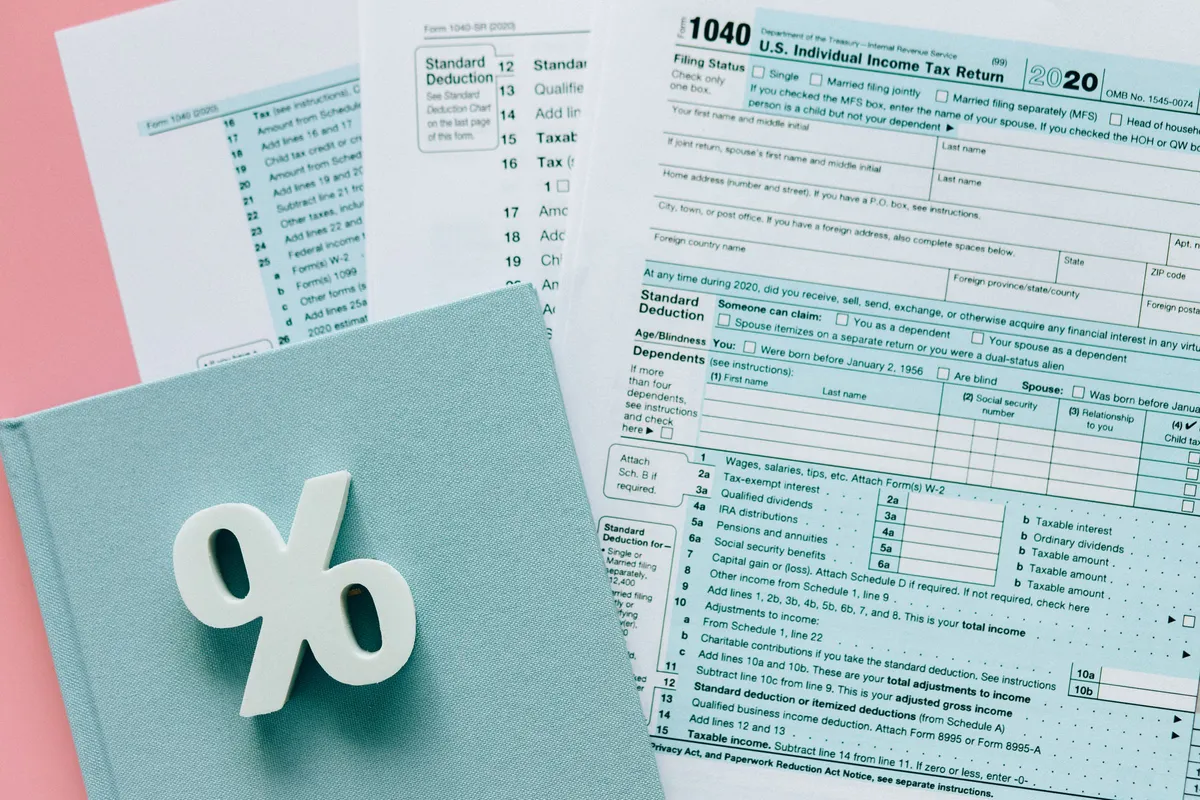
Suppose a hypothetical filer has itemizable expenses that add up to a certain amount: state and local taxes within the allowed cap, mortgage interest, and charitable gifts. You would add them up and compare the total with the standard deduction for your filing status. If the standard deduction is larger, itemizing gains you nothing. If your itemized total is larger, itemizing lowers your taxable income more. Always look up the current standard deduction amount on IRS.gov, because it changes and this article deliberately does not quote it.
Situations That Can Change the Picture
- Age or blindness can increase the standard deduction for some filers.
- Someone who can be claimed as a dependent on another return may face different rules.
- In many cases, if one spouse itemizes on a married-filing-separately return, the other must as well.
- A big one-time expense, such as large medical bills or a major charitable gift, can make itemizing worthwhile in a single year.
Bunching Deductions
Some people group deductible expenses into alternating years, such as making two years of charitable gifts in one year, so they can itemize in that year and take the standard deduction in the next. Whether this helps depends on your numbers, so consider running both scenarios or asking a tax professional.
State Returns Are Separate
Your state may have its own standard deduction or none at all. Check your state tax agency rather than assuming the federal rules carry over. Some states also let you choose differently than you did federally, so it is worth reading your state's instructions before you assume the two returns must match.
A Quick Yearly Habit
Each year, before filing, spend ten minutes totaling your possible itemized expenses. If the total is clearly below the standard deduction, you can stop there and file with confidence. If it is close, run the numbers more carefully or ask for help.
Frequently Asked Questions
Can I switch between standard and itemized each year?
Yes -- you can choose whichever is more favorable each tax year; it's not a permanent election, and your circumstances (a new mortgage, a particularly generous charitable-giving year) might make itemizing worthwhile in one year even if the standard deduction made more sense the year before or after.
Does the standard deduction amount differ for someone who is 65 or older?
Yes -- an additional amount is generally added to the standard deduction for taxpayers who are 65 or older (or blind), on top of the regular filing-status amount, so check the specific current-year figure that applies if this describes your situation.
If I take the standard deduction, does that mean I get no credit for charitable donations at all?
Under current standard tax rules, charitable deductions are generally only available if you itemize -- taking the standard deduction means those specific donations don't separately reduce your taxable income, even though the donation itself is still a genuine charitable act independent of any tax benefit.
Does the standard deduction amount differ by state, or is it purely federal?
The federal standard deduction is uniform across states for a given filing status, but many states have their own separate state income tax with their own distinct standard deduction (or none at all) -- don't assume your state automatically mirrors the federal figure, since state tax rules are set independently.
Can married couples filing jointly ever benefit from filing separately to itemize?
In specific, less common circumstances this can make sense (certain large medical expense deductions, for instance, are more accessible when income is split between two separate returns), but filing separately usually results in a worse overall tax outcome for most couples -- this is a genuinely situational decision worth running both ways with tax software or a professional before choosing.
Is the standard deduction the same thing as a tax credit?
No -- a deduction reduces taxable income before tax is calculated, while a credit reduces the tax owed directly, dollar for dollar, after that calculation. The two work differently and shouldn't be confused, since a credit of a given size is generally worth more than a deduction of the same nominal amount.
Is the standard deduction subtracted before or after other adjustments to income?
It's applied after adjustments to arrive at adjusted gross income, then subtracted from that to reach taxable income -- the specific sequence of calculations on a tax return follows a defined order, which tax software handles automatically without requiring you to track the sequence yourself.
Can I switch between standard and itemizing each year?
Generally yes. You choose the method that works best each year, though there are some special situations to check.
Does taking the standard deduction affect my refund?
It lowers your taxable income, which affects your total tax. Your refund also depends on what was withheld or paid during the year.
Where do I find the current amount?
On IRS.gov, which publishes the amount for each filing status every year.
Comments (0)
No comments yet. Be the first to share your thoughts.