
US vs Metric: A Practical Unit Conversion Guide
Why This Is Still a Real Everyday Problem
The US remains one of the only countries using customary units (inches, pounds, Fahrenheit) day-to-day, while most of the world -- and most international products, recipes, packaging, and scientific work -- uses metric. This creates constant small conversion needs that most Americans encounter regularly: reading a recipe from a European site, understanding a product spec sheet from an international manufacturer, following a fitness or medical measurement given in metric, or simply communicating clearly with someone from a metric-using country. None of these are rare edge cases; they're routine friction points in an increasingly globally connected everyday life.
The Most Commonly Needed Conversions
For length, the inches to cm, feet to meters, and miles to km converters cover the range from small measurements to travel distances. For weight, pounds to kg and ounces to grams handle everything from body weight to cooking ingredients. Temperature comes up constantly for anyone reading a weather forecast, oven setting, or medical reading from a metric source -- the Fahrenheit to Celsius converter handles that. And for cooking specifically, cups to ml and gallons to liters bridge the gap between US recipe conventions and the volume measurements used almost everywhere else in the world.
Why Exact Conversion Factors Matter
A rounded conversion factor (like "1 inch ≈ 2.5 cm" instead of the exact 2.54) introduces small errors that seem negligible on a single calculation but compound meaningfully in precise applications like engineering, cooking at scale (doubling or tripling a recipe multiplies any rounding error right along with it), or construction, where a small measurement error can accumulate into a visible, costly problem across a larger project. Every converter on this site uses the exact, internationally defined conversion factor rather than a rounded approximation, so results stay accurate regardless of scale.
Cooking Is a Special Case
Converting between weight and volume for ingredients (like grams to teaspoons) requires knowing the ingredient's density, since a teaspoon of water and a teaspoon of honey weigh meaningfully different amounts despite occupying the same volume -- a detail that trips up naive conversion attempts that assume all ingredients behave like water. See the Grams to Teaspoons Converter, which lets you select the specific ingredient rather than applying a one-size-fits-all density assumption that would be wrong for most actual cooking ingredients.
Building a Personal Reference for Your Most-Used Conversions
If you regularly work with recipes, products, or communication that mixes both unit systems, it's worth identifying the handful of conversions you personally reach for most often -- likely a small subset of the full list -- and bookmarking those specific tools directly rather than searching fresh each time. This is a small habit that saves real time across dozens of future conversions, especially for anyone regularly cooking from international recipes or working with specs from overseas manufacturers.
A Note for Students and DIY Projects
Beyond everyday life, unit conversion shows up constantly in academic contexts (science coursework almost always uses metric) and DIY projects that reference international plans, patterns, or product specifications. Keeping the exact conversion factors handy -- rather than relying on memory or a rounded approximation -- matters more in these contexts than casual everyday use, since a small error compounds across a multi-step calculation or a physical project where measurements need to line up precisely across many individually cut or measured pieces.
Rounding: How Precise Do You Need to Be?
One of the trickiest parts of converting units is deciding how many decimal places to keep. Rounding too early can pile up small errors, especially in a multi-step project. A sensible rule is to keep extra digits during the calculation and round only at the end, based on how the result will be used. A recipe rarely needs more than a whole gram or a small fraction of a cup, while cutting lumber or machining a part may call for a fraction of a millimeter.
A Worked Example: Converting a Whole Project
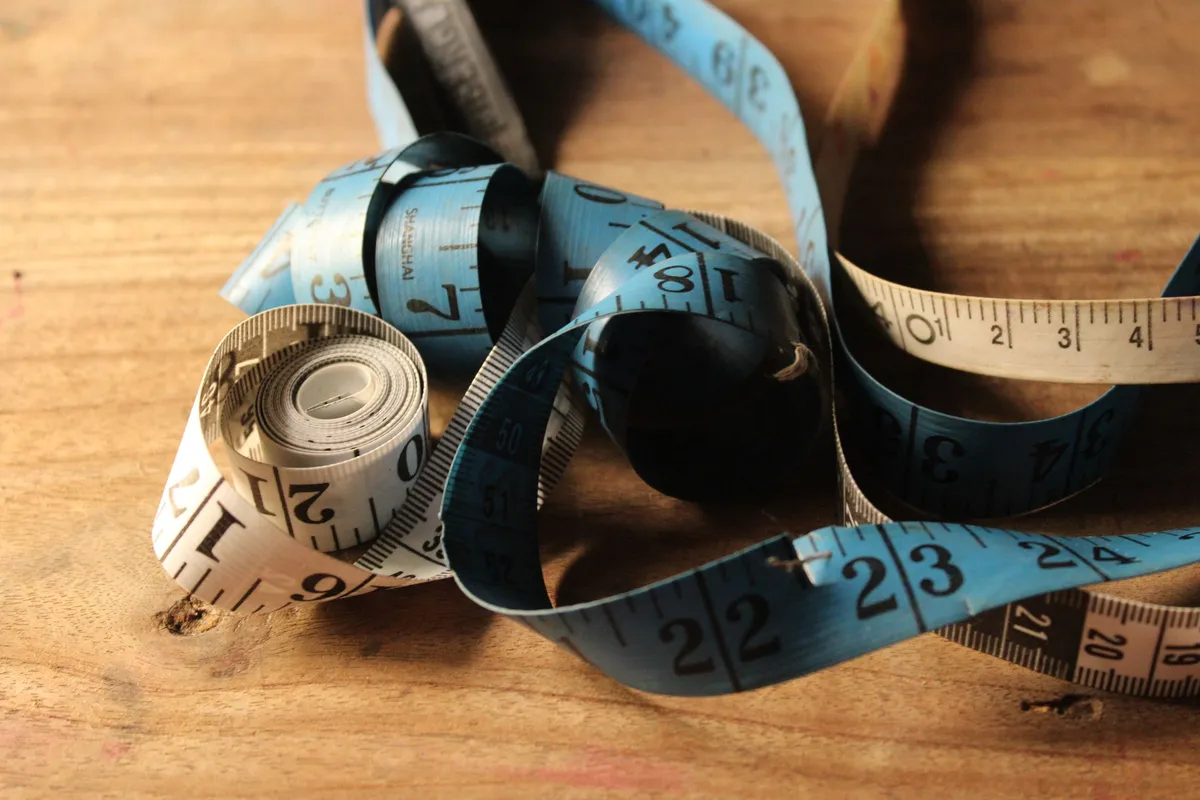
Imagine a hypothetical DIY shelf plan written in inches, and the store sells boards labeled in centimeters. You need a piece 36 inches long. Multiplying by 2.54 gives 91.44 centimeters. If the store cuts to the nearest half centimeter, you would ask for 91.5, which is slightly long, and you can trim later. It is generally safer to round up and trim than to round down and come up short.
Common Conversion Mistakes
- Mixing up weight and volume: a fluid ounce measures volume, while an ounce on a scale measures weight, and they are not interchangeable.
- Confusing US and imperial measures: a US gallon and a UK gallon are different sizes, so check which one a recipe or fuel figure uses.
- Converting temperature like other units: Fahrenheit and Celsius need an offset, not just a multiplier.
- Forgetting to convert squared or cubed units: area and volume conversion factors must be squared or cubed too.
- Rounding each step separately in a chain of conversions.
Quick Mental Estimates
For a rough sense of scale, a few shortcuts help when you cannot pull out a calculator: a meter is a little more than a yard, a kilometer is a bit over half a mile, a kilogram is a bit over two pounds, and a liter is a bit more than a quart. These are only ballparks for everyday intuition, so use the converters above whenever accuracy matters, such as medication, construction, or shipping.
When Accuracy Truly Matters
For safety-critical or regulated uses, such as medication dosing, engineering specifications, or legal documents, do not rely on a rough conversion. Use an exact factor, double-check the result, and confirm with a qualified professional or the source documentation when in doubt.
Frequently Asked Questions
Will the US ever fully switch to metric?
There's no indication of an imminent nationwide switch -- customary units remain deeply embedded in US daily life, construction, and industry, even as metric is used in science, medicine, and some manufacturing sectors already.
Why does the US still use customary units when most of the world uses metric?
This traces back to historical, economic, and infrastructure reasons -- the cost and disruption of a full nationwide conversion across existing tools, road signage, construction standards, and consumer habits has repeatedly outweighed the perceived benefit of switching, even though metric is officially recognized and used in some sectors.
Are US customary units and British Imperial units the same?
Not entirely -- while they share a common historical origin and many units share names, some definitions differ slightly between the two systems (a US gallon and a UK imperial gallon are different volumes, for instance), so it's worth confirming which specific system a source is using for anything precise.
Which conversions are most important to know for international travel?
Temperature (for weather and packing decisions), distance (for understanding how far things are on road signs and maps), and weight (for luggage limits, which are often stated in kilograms internationally) tend to come up most frequently for travelers -- worth having quick mental reference points for these three even without a calculator handy.
Do scientific and medical fields in the US actually use metric?
Yes, predominantly -- US science, medicine, and much of manufacturing already operate primarily in metric units, even though everyday consumer life (recipes, road signs, body weight, home measurements) remains largely customary. This split is part of why many Americans are more comfortable with metric in some contexts than others.
Are food nutrition labels in the US metric or customary?
US nutrition labels commonly show both -- serving sizes and nutrient amounts often appear in grams or milligrams (metric) alongside a customary household measure (like cups or ounces), reflecting the dual-system reality of everyday American consumer products.
Should I trust an online converter, or double-check with a manual calculation?
A converter built on the exact defined conversion factor (as opposed to a rounded approximation) is reliable for everyday use -- for a critical, high-stakes calculation, spot-checking the result against the known exact factor is a reasonable extra step, though not strictly necessary for a properly built tool.
Should I round up or down when converting measurements?
It depends on the use. For cutting materials, rounding up and trimming is often safer. For cooking, a small difference rarely matters. For anything safety related, use the precise value.
Why is a US gallon different from a UK gallon?
The two countries historically defined the gallon differently, and the sizes are not the same. Check which system a figure comes from before converting.
What is the easiest way to double-check a conversion?
Convert the result back to the original unit and see if you land near your starting number. A big mismatch means something went wrong.
Comments (0)
No comments yet. Be the first to share your thoughts.